Change Management Training: A Guide for Project Managers in Industry
70%! For the past 30 years, this figure has represented the failure rate of transformation processes in industry*. Behind this percentage lies a reality on the ground: a lack of training for managers in change management. Because, yes: a successful transformation relies first and foremost on the managerial approach.
Put yourself in this situation: your company has decided to integrate AI into its business processes. You are the manager in charge of steering the change. Your operators have 15 years’ experience: the way they work is about to change and you need to support them. How do you go about it? Do you feel sufficiently equipped to lead the project to success? This practical guide reveals the first steps to ensure a smooth start to your organisational transformation.
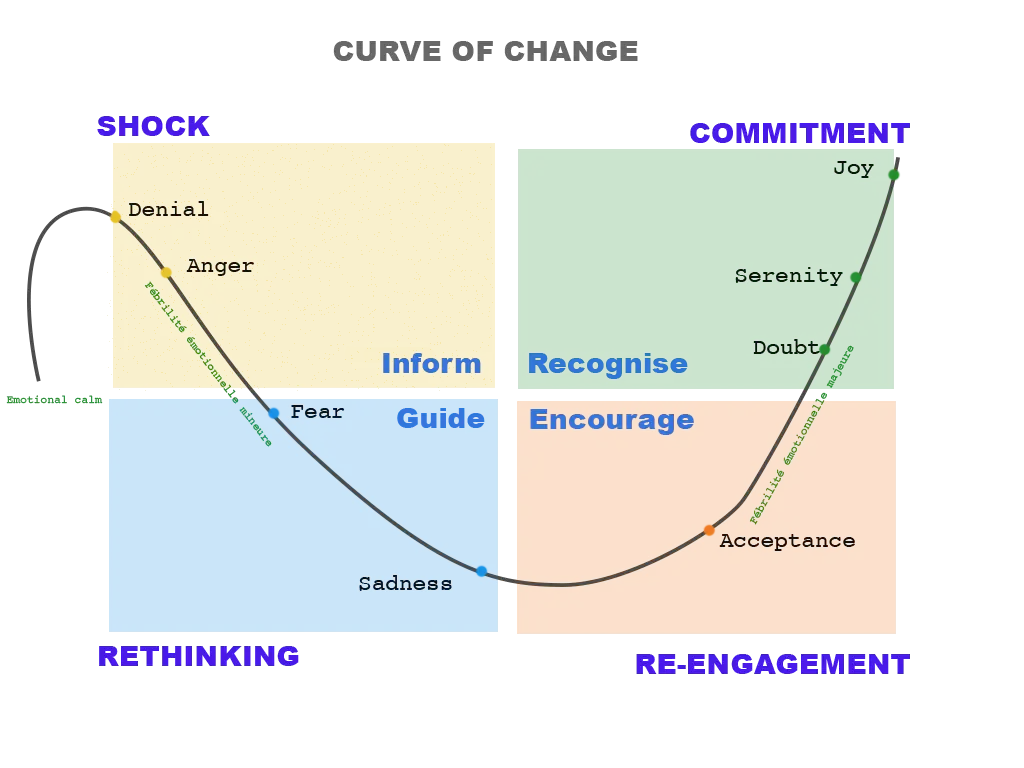
Understanding the curve of change to anticipate reactions
That’s it! You’ve announced the upcoming changes. I bet that:
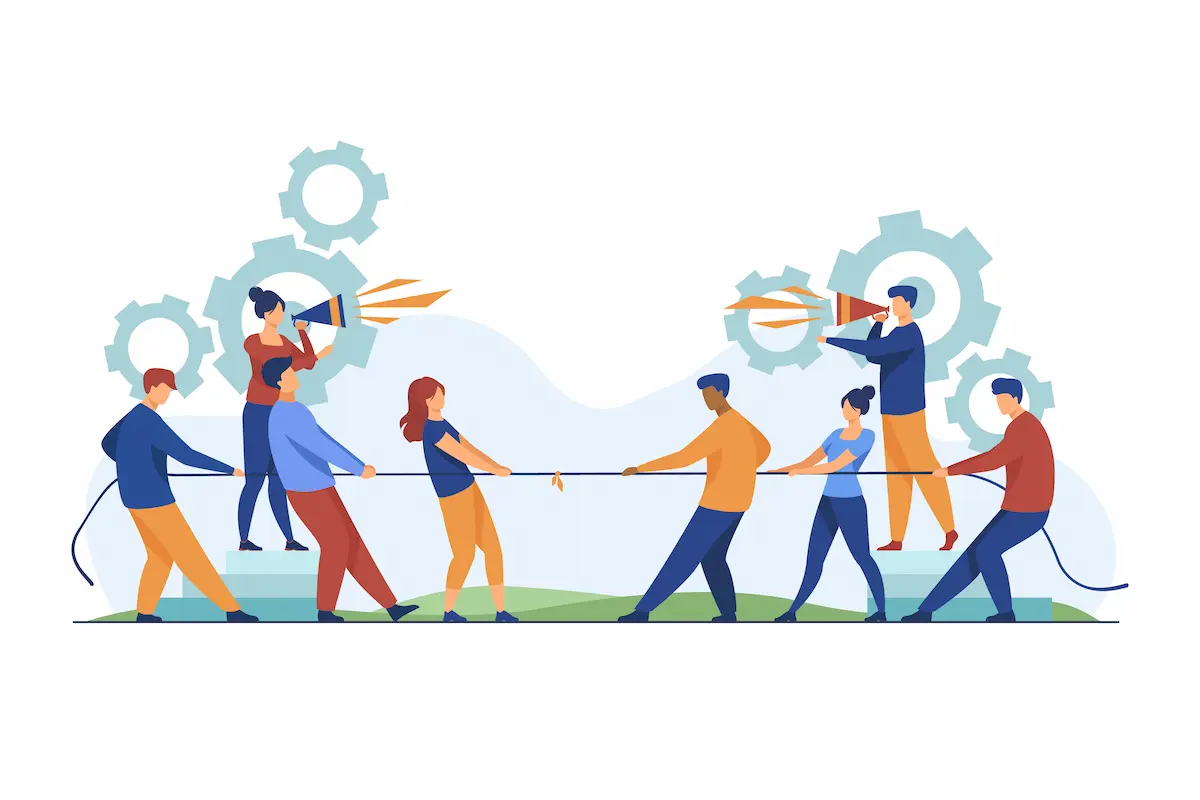
the line operator refuses to do things any other way;
the maintenance technician keeps referring to his old manuals;
the workshop manager turns a blind eye and lets it slide.
In every transformation project, the same scenarios play out so often that it’s possible to map out these behaviours. Your team’s reactions follow the stages of a process formalised by Elisabeth Kübler-Ross: the change curve. Four phases (shock, questioning, commitment, remobilisation), each requiring a different managerial approach.
To navigate these phases and support your staff, make use of educational approaches. Introduce the change curve as a framework that will help your teams understand where you want to take them. For you, it is also a way to overcome:
the denial of the operator who “has always done it this way”;
the anger following the announcement of a new process;
the slump when motivation plummets halfway through the project.
This low point on the curve is the critical moment when many industrial managers either give up or push too hard, at the risk of causing the project to fail. Understanding this curve therefore means:
understanding how our emotions affect us during change (whether technical or organisational); accepting our emotions;
no longer being taken by surprise; being able to anticipate and prepare;
no longer simply enduring.
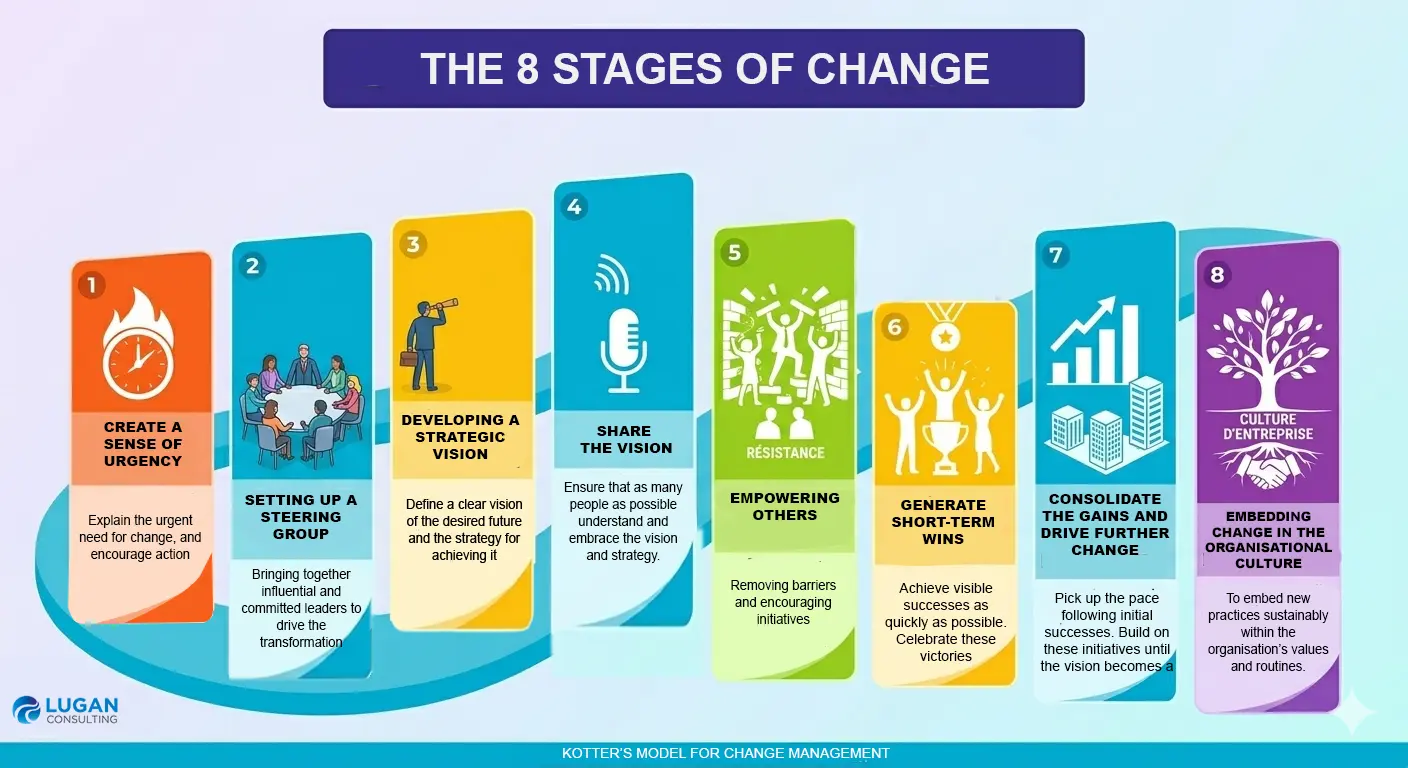
The 8 steps of Kotter’s model: the method for driving transformation
John Kotter’s model is another of the key principles I share during my training sessions. This Harvard Business School professor (and, incidentally, author of the bestseller *Leading Change*) has outlined the eight key steps leading to successful change:
Create a sense of urgency.
Form a steering group.
Develop a strategic vision.
Communicate the vision.
Empower others.
Achieve short-term wins.
Persist to consolidate gains.
Embed the change in the culture.
In industry or within large organisations, the scale of the transformations is such that it is essential for the organisation and its managers to ensure these stages are followed. Each stage requires appropriate guidance and the implementation of specific tools. This is precisely why managers need help to manage change methodically. For the key to successful change lies first and foremost in their ability to get teams on board with the changes ahead. They are the true champions of the process.
Applying change engineering: 3 practical pillars for industry
1. Co-create
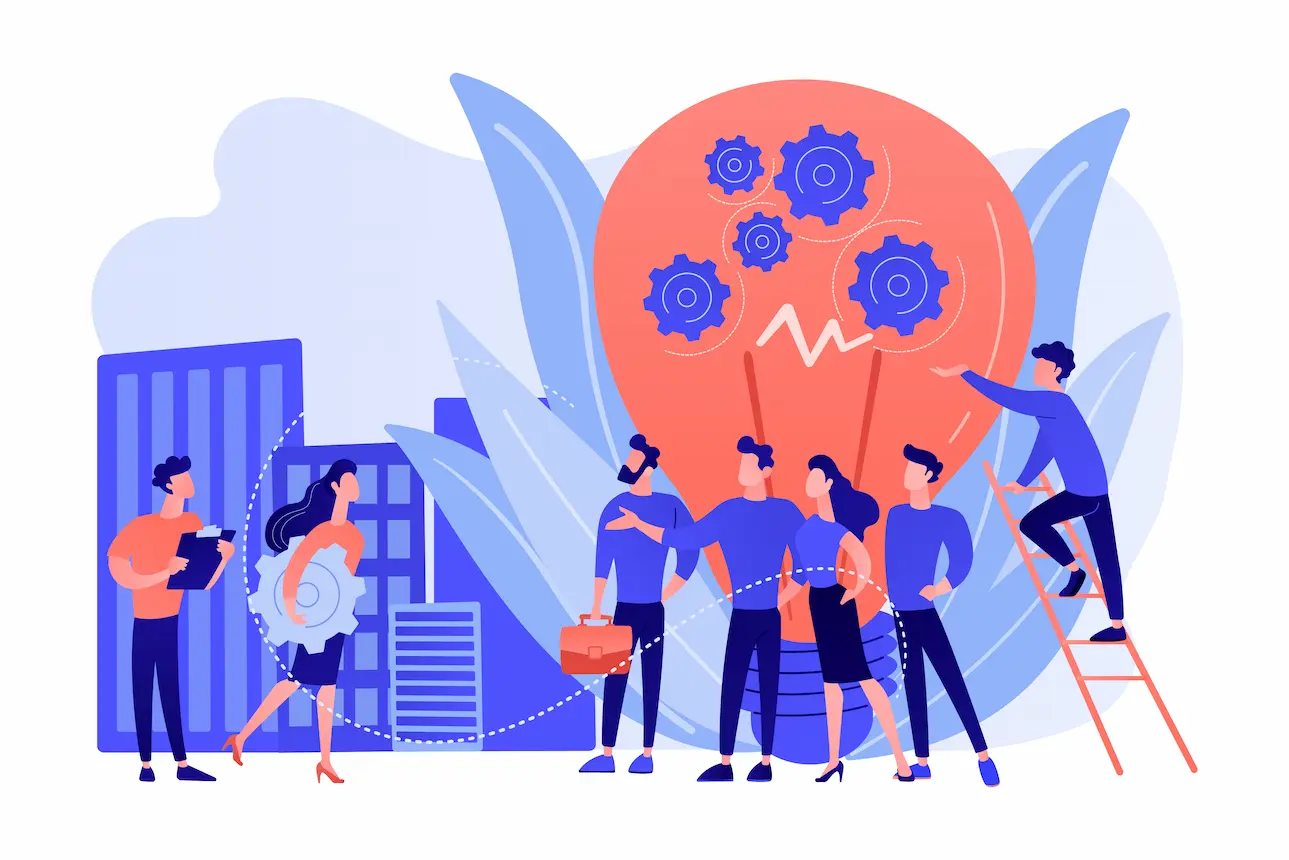
To begin with, introduce the change gradually, by involving staff rather than imposing it on them. In our context, for example: integrate AI into your operators’ expertise.
Set up workshops where operators can test the tool in ‘beta’ mode. Let them identify any bugs or shortcomings in the AI themselves, based on their own experience. Test it with them. Gather their feedback. Report any issues with usability. Reassure them.
What happens is that the operator is no longer merely subjected to the change; they become the guarantor of the new tool’s reliability.
2. EMPHASISE THE RIGHT TO MAKE MISTAKES
As the new routine takes hold, productivity will dip temporarily. If you set the same productivity targets from day one, your teams will reject the project.
Temporarily adjust your key performance indicators. Reframe a lack of effort, but celebrate the mistakes that enable learning and process improvement.
What happens: you reduce the mental load and stress that cause the tool to be rejected, and you secure the low phase of the curve.
3. VALUING HUMAN EXPERTISE
The underlying anxiety felt by any operator when faced with AI is the fear of being sidelined: the fear of being replaced by a machine or of becoming a mere foot soldier.
Reassure them. In our situation, remind them, for example, that AI only handles data processing or automation, and emphasise that humans remain indispensable for their critical thinking, their experience with the material and their power to make the final decision.
What happens: you highlight your teams’ strengths and strengthen team cohesion. Remember that recognition is the number one driver of motivation.
Take it a step further: ensure the success of your projects with change management training tailored to the industry
Let’s be realistic, though. Whilst the advice given earlier helps you lay solid foundations, relying solely on instinct to drive a major industrial transformation project forward can prove risky. In industry, managing such programmes is a matter of change management: a methodical, scientific and well-equipped approach remains essential.
Training means stopping improvisation so that you can:
apply rigorous processes capable of deciphering resistance;
reassure your teams;
safeguard your performance indicators.
Opting for change management training guarantees:
A detailed understanding of change processes.
A clear interpretation of signs of resistance before they become obstacles.
The creation of phased action plans, tailored to the pace of production.
Teams that find purpose, without halting production.
Download the LUGAN CONSULTING Change Management Training Programme
Downloading
Send link to
Planning a renovation project?
Don’t let a lack of planning undermine your transition.
Find out how our bespoke programme equips your managers to deal with the realities on the ground.
Nous utilisons des cookies pour vous garantir la meilleure expérience sur notre site web. Si vous continuez à utiliser ce site, nous supposerons que vous en êtes satisfait.
Vous pouvez révoquer votre consentement à tout moment en utilisant le bouton « Révoquer le consentement ».